
Offshore Structures and Platforms
Twelve videos on how jackets, gravity bases, floating platforms and pipelines are built, installed and kept in place. Module 1 of the CSWIP 3.1u syllabus. I did not make them. I picked them, put them in teaching order, and wrote under each one what the exam wants you to take from it.
Video by video, with the exam angle
Each video teaches the concept. The line under it tells you how that concept turns up in the exam and where divers lose the mark.
The big picture

Exam angle. Fixed or floating, that is the first sort the exam makes. Jackets and gravity bases sit on the seabed. Semi-subs, TLPs, FPSOs and jack-ups float or stand on legs. Know which is which before anything else.

Exam angle. Watch for the word compliant. A compliant structure moves with the applied forces instead of resisting them. A semi-sub gets its stability by flooding its pontoons, not the hull.
Steel jackets: where you will spend your career

Exam angle. Legs, members, nodes, mud mats, pile sleeves. A node is where two or more members meet, and it is the priority target on every survey because that is where fatigue cracks start.

Exam angle. The jacket is launched, upended, set on its mud mats, then piled. Piles are driven through or alongside the legs. The jacket is not held by its own weight. That is the gravity base, and the exam likes to swap them.

Exam angle. After piling, the gap between the pile and the pile sleeve is filled with grout. That grout makes the rigid connection that carries the load from jacket to pile. Grout seals and packers keep it in the annulus while it sets.
Pipelines
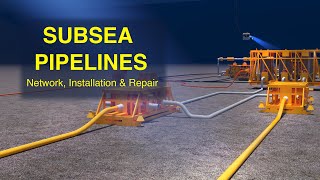
Exam angle. Five facts to lock in. A pipe joint is 12 metres. The butt weld between joints is the main inspection target. A free span is an unsupported length above the seabed. Concrete weight coating is there for negative buoyancy first, protection second.
Floating and tension leg platforms

Exam angle. A tension leg platform floats with more buoyancy than it needs, and vertical tethers hold it down. The tethers stay in tension all the time. That is what stops heave and keeps the platform almost still in the vertical.

Exam angle. The FPSO question is the turret mooring. One connection point lets the vessel weathervane, turning to face wind and waves while the risers stay put. Say weathervane in the answer.
Gravity base structures

Exam angle. A gravity base is held in place by its own weight. No piles. Two terms come up: Jarlan holes let water pass through the base cells to cut wave loading, and the cachetage point is where the prestress tendons are locked off.

Exam angle. Built upright in a deep fjord, floated out and ballasted down. Notice how the concrete is prestressed. Concrete is strong in compression and weak in tension, and prestressing keeps it in compression.
Jack-ups and why inspection exists

Exam angle. A jack-up floats to location, then lowers its legs and jacks the hull clear of the water. Spud cans spread the load on the seabed. The air gap is measured from the lowest deck to the highest wave crest, not to mean sea level.

Exam angle. This is why the inspection industry exists in its present form. The exam does not test dates. It tests ALARP, As Low As Reasonably Practicable, the Duty Holder as the operating company, and the Safety Case reviewed every five years.
The course is the exam practice
These videos show the structures. The NDTPrep 3.1u Interactive Theory course puts them in the order the syllabus uses, with a labelled jacket model, the plain-English explanations, and a quiz at the end of every module. Then the Q&A and Flashcards drill it until it sticks.
The videos on this page belong to their creators. I have not edited them. My notes are my own reading of the CSWIP syllabus and are not endorsed by the video makers.